

Unlawful Stops and Arrest Defects That Can Trigger Suppression (and Sometimes Dismissal)
Reasonable Suspicion Problems: When the Traffic Stop Wasn’t Legally Justified
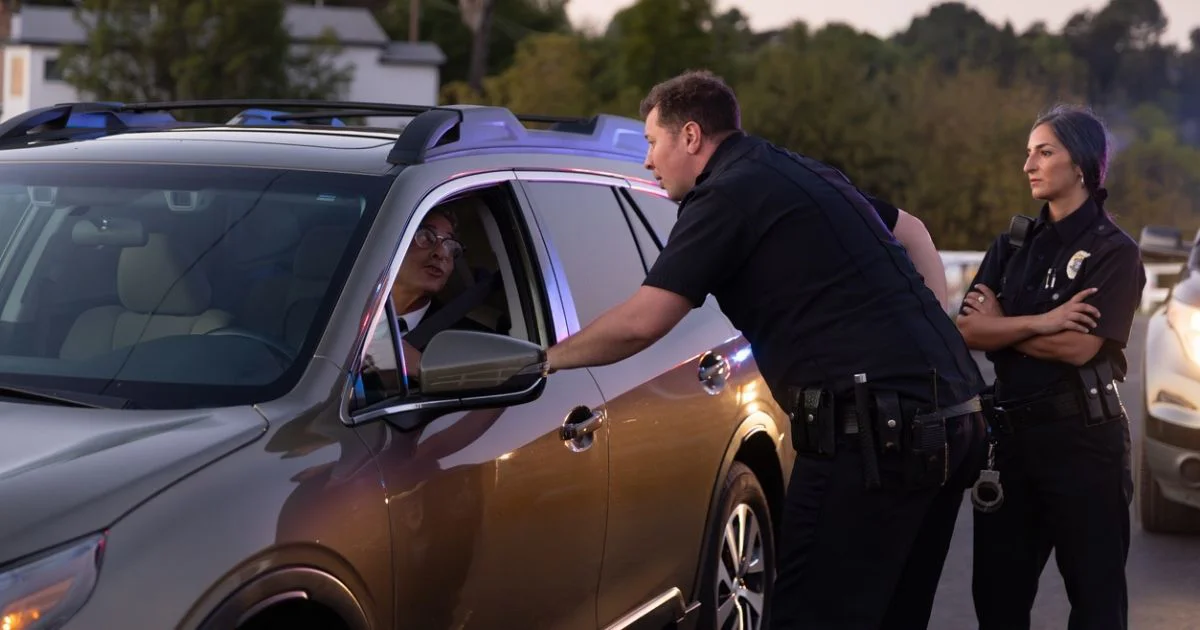
Most DUI cases in Washington start the same way: a traffic stop, a few questions, then a pivot into a DUI investigation. But the Constitution requires the officer to have reasonable suspicion—specific, articulable facts—to stop your car in the first place. If the reason is too thin (for example, vague “weaving” within the lane without a clear safety issue, a misunderstanding of a traffic rule, or an unreliable tip), your attorney may file a motion to suppress evidence obtained after the stop. In real-world practice, this is where the paper trail matters: dispatch/CAD logs, 911 recordings, and dashcam/bodycam footage often show what the officer observed (or didn’t). In Washington, even when stops are “pretextual” (a minor traffic reason used to investigate something else), they can still be litigated—because the key question becomes whether there was a lawful basis to stop and whether the officer’s stated observations hold up on video and in reports.
If the stop is ruled unlawful, the ripple effect can be huge: field sobriety tests, statements, and breath or blood results can become inadmissible as “fruit of the poisonous tree.” And when the most important evidence is suppressed, prosecutors frequently reassess whether they can still prove DUI beyond a reasonable doubt. If you’re trying to spot red flags to discuss with a DUI lawyer, start here:
- What was the exact reason for the stop? (Not a conclusion—actual driving facts.)
- Is there video? Dashcam/bodycam can confirm or contradict “weaving,” speed, signaling, or lane travel.
- Was it a tip? Anonymous tips often raise reliability and corroboration issues.
- Was it a checkpoint? Checkpoints have compliance requirements; not every stop-by-plan is automatically valid.
Probable Cause Gaps: Arrest Without Enough Evidence of Impairment
A lawful stop doesn’t automatically mean a lawful DUI arrest. To arrest you, the officer needs probable cause—enough facts, under the “totality of the circumstances,” to believe you were driving under the influence. Officers often cite the same set of observations: odor of alcohol, watery or bloodshot eyes, “fumbling” with documents, admissions like “I had two beers,” and performance on field sobriety tests. The defense strategy is not to argue each item in isolation, but to show how common and non-specific many “clues” are—especially when there are alternative explanations like fatigue after a long shift, anxiety during a roadside encounter, language barriers, or medical conditions affecting balance and coordination. Washington DUI cases can turn on whether the officer’s narrative is detailed and consistent or whether it’s boilerplate that doesn’t match the video.
When probable cause is weak, a lawyer may challenge the arrest and seek to suppress evidence gathered after that point—like statements during custody, breath testing procedures at the station, or additional questioning. Even when a court doesn’t dismiss outright, exposing probable-cause weaknesses can create leverage for a reduction (for example, to Reckless Driving or Negligent Driving 1st) or a better resolution. Items worth asking your attorney to scrutinize include:
- Timing and detail: Did the officer document when each “clue” appeared, or is it a generic list?
- FST foundation: Were tests explained correctly and conducted per NHTSA concepts?
- Consistency: Do the report, video, and officer testimony match?
- Medical/physiological factors: Anything that could mimic “impairment” should be documented early.
Field Sobriety Test and Observation Errors That Undermine the State’s “Impairment” Story
Standardized FST Noncompliance: HGN, Walk-and-Turn, One-Leg Stand Mistakes
Field sobriety tests often carry more persuasive weight than they deserve, because jurors assume they’re objective. The reality is that the “standardized” tests—HGN (eye test), Walk-and-Turn, and One-Leg Stand—are only considered reliable when administered in a standardized way consistent with NHTSA materials. Small deviations matter: unclear instructions, poor demonstration, uneven or sloped pavement, bad lighting, heavy traffic, footwear issues, or a bodycam angle that doesn’t actually show foot placement and balance. HGN, in particular, is highly technical—stimulus distance, timing, and whether the officer checked for medical exclusions can all become cross-examination issues. When a DUI defense attorney finds enough deviation, the argument isn’t just “the test is unfair,” it’s that the test results are not a dependable indicator of impairment and should be given little weight—or in some cases excluded or limited.
If you’re building a practical checklist for your consult, think like a reviewer of procedure rather than a critic of you as a person. These are the kinds of questions that often uncover useful defenses:
- Where were the tests performed (surface, slope, weather, lighting)?
- Were instructions captured on video clearly enough to evaluate compliance?
- Did the officer ask about injuries or medical issues before balance tests?
- How were “clues” scored? Was scoring explained, or just asserted?
Non-Standard Tests and “Clues” That Don’t Actually Prove DUI
Many officers also use non-standard roadside tasks—alphabet recitation, counting, finger-to-nose, Romberg (estimating 30 seconds), or “divide attention” questions. These aren’t standardized in the NHTSA sense, and that makes them especially vulnerable to being characterized as subjective, influenced by stress, and prone to confirmation bias. People can stumble over the alphabet when they’re nervous, cold, upset, or trying to multitask under pressure. Add in accents, hearing issues, or unclear directions, and what looks like “confusion” can simply be miscommunication. A skilled DUI lawyer will focus on how these tests can be shaped by the officer’s expectations, the officer’s report-writing habits (boilerplate language is common), and whether the video supports the conclusions being drawn.
Just as important: “alternative explanations” aren’t excuses—they are reasonable doubt when they’re supported by facts. Conditions like inner-ear disorders, neuropathy, old injuries, anxiety, diabetes/ketosis, exhaustion, or certain medications can affect balance, speech cadence, and coordination. Acid reflux/GERD can also matter in breath-testing contexts (because it can increase the risk of mouth alcohol). The earlier these issues are documented and tied to the evidence (medical records, prescriptions, witness statements, timeline of sleep/food), the more powerfully they can counter a one-size-fits-all impairment narrative.
Breathalyzer and Blood Test Defects: Scientific Weak Points That Can Get Results Excluded
Breath Test Suppression: Observation Period, Records, and Operator Issues
Breath results can feel like the whole case—until you look at the foundation required to make them trustworthy. In Washington, breath testing typically involves an approved instrument (often referred to generically as a breath machine, such as a DataMaster-type device), and the prosecution still needs to show proper procedure and reliable operation. Defense review often focuses on whether the operator was properly qualified, whether the required pre-test observation period was actually followed (and documented), and whether the machine’s maintenance and accuracy checks support confidence in the result. Breath testing also sits on scientific assumptions that don’t fit everyone neatly, including variability in alcohol absorption/elimination and breath-to-blood ratios—issues that can matter in “rising BAC” scenarios where a person’s alcohol level may be higher later than at the time they were driving (a concept discussed broadly in alcohol pharmacokinetics literature).
If you want a concrete “what records should my lawyer ask for?” list, these are common starting points in a Washington DUI breath case:
- Instrument maintenance/accuracy records and related quality assurance documentation
- Operator certification/permit and training records (where applicable)
- Breath test sequence printouts and any error messages or irregularities
- Observation period notes and video showing what happened before the sample
Blood Draw and Lab Failures: Warrant/Consent, Chain of Custody, and Quality Control
Blood testing is often portrayed as “more accurate,” but it introduces more steps—and each step is a place errors can creep in. The legal side matters first: Was there valid consent, or was a warrant required and properly obtained? Then comes the practical chain: who drew the blood, what was used to clean the site, what tubes were used (preservative/anticoagulant), how it was labeled, how it was stored, and how it was transported. Breaks in chain of custody can create doubt about whether the sample tested is truly yours and whether it was protected from contamination, fermentation, or degradation. These issues are not “gotchas”—they’re foundational reliability questions, and the lab should be able to document its handling through every transfer and every analytical step.
What many generic DUI articles skip is the lab “source data” that can reveal whether a result is as clean as it looks on the report. A defense attorney may request batch records, instrument run logs, analyst notes, and gas chromatography (GC) materials such as chromatograms and quality-control results, along with information about uncertainty and proficiency testing (often tied to accreditation/quality systems). When the state can’t or won’t produce key underlying records, it can support motions to compel, requests for sanctions, and arguments to exclude the test—or at minimum, to reduce the weight a judge or jury should give it.
Procedural and Constitutional Violations That Can Force Dropped or Reduced Charges
Miranda, Right to Counsel, and Involuntary Statements
Not every roadside question requires Miranda warnings, but once a person is in custody and subject to interrogation, constitutional protections can kick in—and statements can sometimes be suppressed if those rules aren’t followed. In DUI cases, this frequently shows up in the “gray zone” between a stop and formal arrest: when questioning becomes accusatory, when a person’s freedom is meaningfully restricted, or when the pressure of the situation makes answers unreliable. Language access can also be decisive. If a driver didn’t fully understand the questions, instructions, or implied-consent warnings, the fairness and voluntariness of what followed can be challenged. These issues can change a case because admissions (“I’m drunk,” “I had more than I said,” “I took pills”) are often used to tie the state’s evidence together.
From a defense standpoint, the goal is to map exactly what was said, when it was said, and under what conditions. That’s why video/audio matters so much. If your case involves extensive questioning, confusion about rights, or pressure tactics, it’s worth discussing with counsel how those facts affect suppression motions and the overall proof picture—especially if the state’s case relies heavily on your words rather than solid impairment evidence.
Discovery Problems, Missing Video, and Speedy Trial Pressure
DUI cases can also unravel because of process failures: delayed disclosures, missing bodycam/dashcam footage, incomplete maintenance records, or credibility issues that should have been disclosed. In legal terms, the defense may raise discovery violations and due-process arguments when potentially exculpatory evidence is withheld or lost. While outright dismissal is not the everyday remedy, courts can order continuances, compel production, exclude evidence, or impose other sanctions depending on the circumstances. Separately, Washington’s court rules and constitutional principles also protect the right to a timely resolution—so unnecessary delays and failures to follow required procedures can become negotiation leverage or litigation issues.
If you’re trying to be proactive, keep a running timeline and preserve what you can while your attorney pursues formal discovery. Helpful items to gather and share with counsel include:
- Your detailed timeline (food, drinks, sleep, medications, driving route, stop time)
- Witness names and contact info (including bar/restaurant receipts if relevant)
- Medical documentation that could affect balance/speech/breath testing
- Any paperwork you received related to testing, license action, or court dates
What “Dismissed” Really Means in Washington: Dismissals, Reductions, Deferred Prosecution, and License Consequences
Dismissal vs Reduction vs Deferred Prosecution: What Outcomes Really Mean
When people ask, “Can a DUI be dismissed?” they’re often picturing a clean slate—and sometimes that happens, especially when key evidence is suppressed or the state can’t prove an essential element. But many “wins” in DUI defense look different in real life: a reduction to a lesser offense (commonly Reckless Driving or Negligent Driving in the First Degree in Washington), an amended charge, or an agreement that avoids some of the harshest penalties. Washington also has a Deferred Prosecution option in certain circumstances, which isn’t a dismissal in the normal sense—it’s a structured program focused on treatment and compliance that can result in the DUI being dismissed after successful completion, but it comes with strict requirements and long-term implications that should be discussed carefully with counsel.
It also matters whether a case is dismissed “with prejudice” (cannot be refiled) or “without prejudice” (could potentially be refiled). Those details affect peace of mind, future risk, and how you plan your next steps. A good DUI defense consult should include an honest conversation about your best realistic path: suppression-based dismissal potential, trial risk, reduction opportunities, or whether a structured alternative like Deferred Prosecution fits your goals and situation.
Parallel Cases: Washington DOL License Suspensions and Hearing Deadlines
One of the biggest blind spots in DUI cases is that there are often two battles running at the same time: the criminal case in court and the administrative license action through the Washington Department of Licensing (DOL). You can “win” one and still lose the other. The DOL process moves fast, with strict deadlines—commonly, you may have only a short window (often 7 days from arrest, depending on the paperwork you received) to request a hearing to challenge a suspension. These hearings tend to focus on specific issues like lawful stop/arrest, probable cause, whether you refused, and whether the test results meet legal thresholds, which means some of the same suppression themes can matter in a different forum.
This is also where early representation can make a practical difference. Subpoenaing officers, challenging foundational breath-test documentation, and locking in testimony can impact both the DOL track and the court case. If you’re in Everett, WA and dealing with a DUI arrest, the safest approach is to treat the first week as critical: preserve deadlines, request hearings on time, and get a defense plan that accounts for both the criminal charge and your ability to drive.
If you’re looking for help now: Snohomish Law PLLC focuses on criminal defense and DUI matters for people in Everett, WA.
If you want a clear, no-nonsense review of your stop, arrest, testing procedures, and DOL timeline—and a checklist of what to demand in discovery—contact Snohomish Law PLLC to discuss your options and next steps while the evidence and deadlines are still fresh.

.png.2601201419185.webp)